
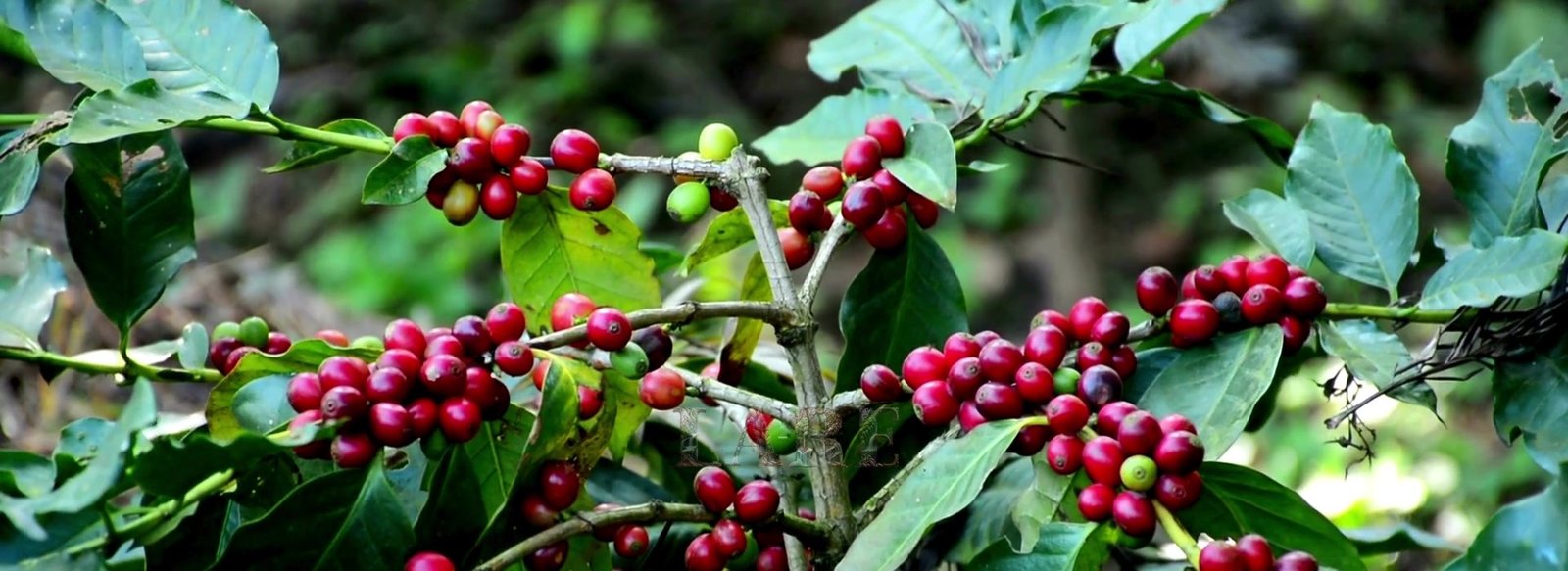
The short version
Arabica grows high, Robusta grows lower. Chikkamagaluru district runs from roughly 900 to 1,600 metres, which is why both are here and why the belt you are shopping in has largely made the decision for you. Arabica sits around 1,000 metres and above; Robusta works best between about 500 and 1,000 metres.
Buyers usually arrive wanting Arabica, because Arabica is what the reputation of this district is built on. That instinct is worth examining. Arabica earns more per kilogram and it holds its resale appeal, but it is the more demanding crop by some distance, and the one that white stem borer attacks. Robusta yields more per acre, shrugs off weather that would set Arabica back a season, and asks a great deal less of an owner who is not going to be on the land every week.
| Arabica | Robusta | |
|---|---|---|
| Elevation it wants | About 1,000 m and above | About 500 to 1,000 m |
| Where in the district | Mudigere, Aldur, higher Kalasa | Sringeri, N.R. Pura, Koppa, lower belts |
| Shade | Needs a proper canopy | Tolerates far more open sun |
| Weather tolerance | Poor. No frost, no sustained heat above ~30°C, no long dry spell | Good. Handles rougher conditions |
| Yield per acre | Lower | Higher |
| Cup and price per kg | Higher | Lower |
| White stem borer | The main target | Not affected in the same way |
| Effort to run | Higher. Shade, pruning and pest discipline | Lower. More forgiving of a light touch |
| Commonly grown with | Pepper, silver oak shade | Arecanut, pepper |
What Arabica actually needs
Roughly 150 to 250 centimetres of rain across the year, and a working range of about 15 to 28 degrees. It will not take frost, it suffers above about 30 degrees, it does not want strong direct sun, and it does badly through a long dry spell. That list is the reason nearly every Arabica block in Chikkamagaluru sits under a shade canopy rather than open sky, and it is why shade management is not cosmetic here. It is the crop's life support.
The varieties you will meet on estates in this district are S.795, which is the old workhorse and still very widely planted, along with Selection 5B, Selection 9 and Cauvery, a Catimor. When you walk a property, ask what is planted in which block and in what year. Plant age shapes the next decade more than most things written on paper.
What Robusta gives you instead
More kilograms and fewer problems. Karnataka Robusta yields have been running at roughly 850 to 900 kilograms per hectare, about 340 to 365 kilograms per acre, though that is a district-level average and no substitute for a specific estate's own crop records across several seasons. It tolerates more sun, copes with rougher weather, and is not the target of the borer. In the lower belts it is very often worked alongside arecanut, which changes the economics of the holding again.
The trade is the cup. Robusta fetches less per kilogram, and always has. Whether that matters depends entirely on what you want the estate to do for you.
The one thing to know before reading anyone's yield figures
The 2025-26 season was a poor one across this district, and it will show up in the records of estates that are otherwise sound. Rain persisted from mid-May to mid-November 2025, with unusually low temperatures and little sunlight. Chikkamagaluru, Hassan and Kodagu all saw leaf and stem rot, berry drop and poor berry development.
The Coffee Board's post-blossom forecast put national output at roughly 4.03 lakh tonnes for 2025-26. The Karnataka Planters' Association put it nearer 3.73 lakh tonnes. Nationally the split was forecast at about 284,875 tonnes of Robusta against 118,125 tonnes of Arabica, with Karnataka alone at about 280,275 tonnes. Robusta carries the volume in India, even though Arabica carries the name.
So if a seller's most recent year looks weak, ask what the three years before it looked like. One bad season in a district-wide bad season tells you very little about the land.
Can you switch a plantation from one to the other?
You can replant. You cannot move the estate uphill. If the elevation, the shade and the rainfall do not suit Arabica, replanting Arabica will not make them suit it, and you will spend several unproductive years discovering that. Going the other way is agronomically easier, but you are usually giving up value to do it.
Buy the crop the land is suited to. That sentence has saved more money than any other on this page.
Common questions about the crop
What is the difference between Arabica and Robusta land in Chikkamagaluru?
Elevation decides it, not preference. Arabica wants roughly 1,000 metres and above; Robusta does its best work between about 500 and 1,000 metres. Chikkamagaluru district spans roughly 900 to 1,600 metres, which is why both grow here and why the belt you are looking at largely settles the question before you do. Mudigere and Aldur sit in Arabica country. Sringeri, N.R. Pura and Koppa are lower and lean Robusta, usually with arecanut alongside.
Which is better to buy, an Arabica estate or a Robusta estate?
Neither is better. They are different businesses. Arabica fetches more per kilogram and holds its resale appeal, but it is fussier: it wants dense shade, it cannot take frost, sustained heat above about 30 degrees, strong direct sun or a long dry spell, and it is the crop white stem borer goes after. Robusta yields more per acre, tolerates more sun and rougher weather, and is far less trouble to run, but the cup fetches less. A buyer who wants a quiet, resilient producing asset often ends up happier on Robusta than they expected.
What rainfall and temperature does Arabica need?
Broadly 150 to 250 centimetres of rain a year and a working range of about 15 to 28 degrees. It is grown under shade almost everywhere in this district for that reason. Robusta copes with a wider band and with more direct sun, which is part of why it sits lower down the slope.
Which Arabica varieties are grown here?
S.795 is the old workhorse and still very widely planted. Selection 5B, Selection 9 and Cauvery, which is a Catimor, are the others you will commonly find on Chikkamagaluru estates. When you view a property, ask what is planted, in which blocks, and in what year. Plant age tells you as much about the next ten years as anything in the RTC.
How much does a Robusta estate yield?
Karnataka Robusta yields have been running at roughly 850 to 900 kilograms per hectare, which is about 340 to 365 kilograms per acre. Treat that as a district-level average, not a promise. A specific estate's yield depends on plant age, shade, upkeep, water and the last three seasons of weather, and the honest way to judge it is the seller's actual crop records over several years, not one good year.
What is white stem borer and should I worry about it?
It is a beetle whose larvae bore into the stem of Arabica plants, and it is the single most feared pest in this district. Erratic weather makes outbreaks worse. Robusta is not affected in the same way. On an Arabica estate, ask directly about borer history, look for tell-tale ridges and holes on stems, and count how many plants have been cut out and replaced. A seller who talks about it openly is usually managing it.
Was the 2025-26 crop a good one?
No, and it is worth knowing before you read anyone's yield claims. Rain persisted from mid-May to mid-November 2025 with low temperatures and little sunlight, and Chikkamagaluru, Hassan and Kodagu all saw leaf and stem rot, berry drop and poor berry development. The Coffee Board's post-blossom forecast put national output at about 4.03 lakh tonnes; the Karnataka Planters' Association put it nearer 3.73 lakh tonnes. If an estate's 2025-26 numbers look weak, that may be the weather rather than the property.
Can I convert a Robusta estate to Arabica, or the other way?
You can replant, but you cannot move the estate uphill. If the elevation, shade and rainfall do not suit Arabica, replanting will not make them suit it, and you will have spent several years finding out. Going the other way, Arabica land to Robusta, is agronomically easier but you are usually giving up value to do it. Buy the crop the land is suited to.
Does India grow more Arabica or Robusta?
Robusta, by a wide margin. The Coffee Board's 2025-26 forecast split national output roughly 284,875 tonnes Robusta against 118,125 tonnes Arabica. Karnataka alone was forecast at about 280,275 tonnes. So while Arabica carries the reputation, Robusta carries the volume, and that is reflected in what is actually for sale here.
What should I look at on the ground to tell them apart?
Arabica is the smaller, neater plant with glossy leaves, grown under a proper canopy, usually higher up and cooler. Robusta is bigger and coarser, with larger leaves, more tolerant of open sky, and you will often see arecanut or pepper worked in around it. If you are unsure standing on the land, that is normal, and it is exactly the sort of thing worth having someone with you for.
Tell us what you're looking for.
Most of our inventory is off-market and never published online. Send us your requirement on WhatsApp or call, we'll come back with what genuinely matches, usually within 24 hours.