
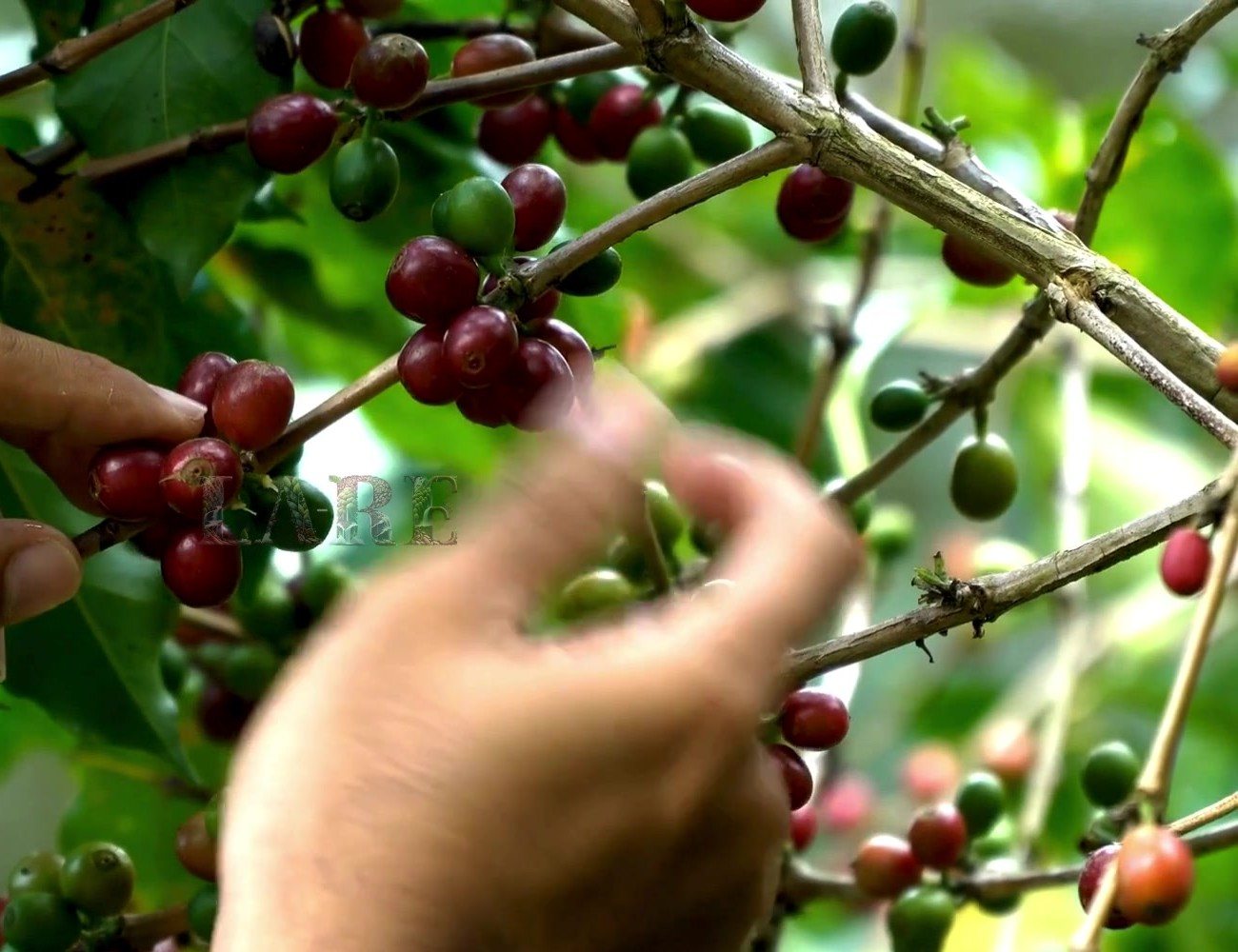
Checked on 8 August 2026. Rates, rules and portals in Karnataka change, sometimes at short notice. Treat this as an orientation, not as advice on your own transaction, and have your advocate confirm anything that decides money.
Yield, and why published averages mislead
National figures for 2025-26 put Arabica yield at roughly 384 kg per hectare and Robusta at about 1,276 kg per hectare, both down slightly on the year. That is around 155 kg and 516 kg per acre respectively.
Karnataka-specific Robusta estimates have been quoted lower, in the region of 850 to 900 kg per hectare, roughly 340 to 365 kg per acre. We give you both because they disagree, and a range you can see is more useful than an average that hides the disagreement.
Either way, treat these as orientation. A specific estate's yield turns on plant age, shade management, water, pruning discipline, borer history and the last three seasons of weather. The only figure worth planning on is that estate's own crop records across several years, and a seller who cannot produce them is telling you something.
Where the money goes in a year
The recurring cost heads on a working plantation are broadly these: labour, which dominates everything else and rises sharply at harvest because picking is done by hand; fertiliser and inputs, including lime, manure and plant protection; shade and pruning work; weeding, typically several rounds a year; processing, whether pulping, drying and curing on the estate or paid out to a curing works; transport of crop off the estate, which is a real line item when the road is poor; power and fuel for pumps and machinery; and maintenance of roads, drains, fencing and buildings.
The Coffee Board's own comparison is that Robusta's average cost of cultivation runs roughly 30 per cent below Arabica's. That single figure explains a great deal about why the two crops suit different buyers: Arabica earns more per kilogram and costs more, in money and in attention, to produce.
We have deliberately not put rupee figures against these heads. Costs on a five-acre holding worked by the family and a 60-acre estate running permanent labour lines are different businesses, and a per-acre average across them would mislead you in whichever direction you happen to sit. Tell us the size and belt you are considering and we will give you real numbers from properties we have actually transacted.
The capital side
Beyond the purchase, the items that commonly need capital are: water, whether a borewell, a tank, a check dam or pumping and piping, and this is usually the first and most important; access, meaning the estate road, culverts and drainage, which quietly determines your transport cost forever; processing equipment, a pulper, a drying yard, sometimes a small curing setup; buildings, the bungalow, labour lines and stores; fencing and boundary establishment; replanting where blocks are old or borer has taken plants out; and machinery, sprayers, pumps, and a vehicle that can actually get up the road in July.
Replanting deserves separate thought. A neglected estate is cheaper for a reason, and the rehabilitation cost plus three to five lean years before the new plants carry properly belong in your arithmetic from the start, not as a surprise in year two.
How to think about the return
Coffee is an agricultural business exposed to weather, price and labour availability, and 2025-26 was a reminder of all three: persistent rain from mid-May to mid-November, leaf and stem rot, berry drop, and a national crop that came in below the Coffee Board's own post-blossom forecast.
Buyers who do best here are usually clear about which of three things they want: income from a working plantation, a place the family returns to, or an appreciating asset in a district where good land is finite. Those lead to different properties. Our ROI calculator lets you model the first with your own assumptions rather than ours.
Common questions
What is the coffee yield per acre in Chikkamagaluru?
National figures for 2025-26 put Arabica at roughly 384 kg per hectare and Robusta at about 1,276 kg per hectare, which is around 155 kg and 516 kg per acre. Karnataka-specific Robusta estimates have been quoted lower, near 850 to 900 kg per hectare or 340 to 365 kg per acre. Treat all of these as orientation: an individual estate's yield depends on plant age, shade, water, upkeep and borer history, and only its own crop records over several seasons are worth planning on.
Is Robusta cheaper to grow than Arabica?
Yes, materially. The Coffee Board's comparison puts Robusta's average cost of cultivation around 30 per cent below Arabica's, alongside a higher yield per acre. Arabica earns more per kilogram but demands more in shade management, pruning discipline and pest control, and it is the crop white stem borer attacks.
What are the main running costs on a coffee estate?
Labour first and by a distance, rising sharply at harvest because picking is by hand. Then fertiliser and inputs, shade and pruning work, several rounds of weeding, processing whether on the estate or at a curing works, transport off the estate, power and fuel for pumps, and maintenance of roads, drains, fencing and buildings.
What capital costs should I expect after buying?
Water is usually first: borewell, tank, pumping and piping. Then the estate road and drainage, which set your transport cost permanently. Then processing equipment such as a pulper and drying yard, buildings, boundary and fencing, replanting where blocks are old or borer-affected, and machinery including a vehicle that can manage the road in monsoon.
Why don't you publish cost figures per acre?
Because a five-acre holding worked by a family and a sixty-acre estate running permanent labour lines are different businesses, and an average across them misleads whichever end you sit at. Tell us the size and belt you are considering and we will give you real numbers from properties we have transacted.
How long before a replanted block produces?
Plan on several lean years before new plants carry properly. This is why a neglected estate is cheaper, and why the rehabilitation cost plus those years belong in your arithmetic before you buy rather than as a discovery in year two.
Tell us what you're looking for.
Most of our inventory is off-market and never published online. Send us your requirement on WhatsApp or call, we'll come back with what genuinely matches, usually within 24 hours.